
America Already Lost the Most Important War

 Introduction
This article is based on a widely circulated YouTube
presentation titled “America Lost The War, Here Is What Happens Next” by Jiang
Xueqin, a Chinese-Canadian educator and geopolitical commentator known for his
channel Predictive History. His work combines historical analysis with game
theory to interpret global power shifts, often focusing on long-term strategic
competition between nations.
In the presentation, Jiang Xueqin advances a provocative
thesis: that the defining conflict of the 21st century is not military, but
economic—specifically between the United States and China—and that this contest
has already been decided.
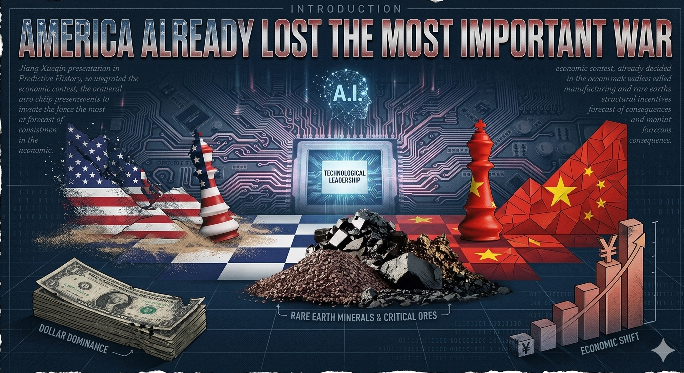
Drawing on trends in global manufacturing, rare earth supply
chains, currency dynamics, and semiconductor production, he argues that the
balance of economic power has fundamentally shifted. The presentation outlines
how decades of policy decisions and structural incentives contributed to this
outcome, and presents a step-by-step forecast of its consequences for the
global economy and everyday life.
The article that follows is a structured and editorially
refined adaptation of Jiang Xueqin’s presentation, preserving its central
arguments while presenting them in a format suitable for general readership.
While some of his conclusions remain debated, his analysis reflects a broader
and growing concern about industrial capacity, supply chain resilience, and the
future of global economic leadership.
The War No One Noticed
America lost a war. Not the wars that dominate headlines—this is not about Afghanistan, Iraq, or Vietnam. This is about a quieter, more consequential conflict: the economic war that may define the next century.
And according to this perspective, it is already over.
A New Kind of Battlefield
In the 21st century, power is not decided only by military
strength. It is determined by:
• Industrial
capacity
• Supply
chains
• Technological
ecosystems
• Financial
systems
By these measures, the balance has shifted. China now produces roughly a third of the world’s manufactured goods—more than the United States, Japan, and Germany combined. This transformation was not accidental. It was the result of decades of strategic focus on building industrial depth.
Meanwhile, much of the United States economy shifted toward
services, finance, and short-term efficiency.
Why Manufacturing Still Matters
Manufacturing is not just about consumer products. It is the
foundation of:
• Military
capability
• Semiconductor
production
• Energy
systems
• Advanced
technology
It is also cumulative. Skills, expertise, and supply
networks build over generations. Once lost, they are difficult to rebuild
quickly.
Control of Critical Resources
Modern economies depend on rare earth elements—materials
essential for electronics, defense systems, and renewable energy.
China dominates both mining and, more importantly,
processing of these materials. Even when resources are sourced elsewhere, they
often rely on Chinese facilities for refinement.
This creates a strategic dependency that is difficult to
reverse.
The Shifting Role of the Dollar
For decades after World War II, the U.S. dollar functioned
as the world’s primary reserve currency. This gave the United States
significant economic advantages.
But that position is gradually changing.
More countries are:
• Trading
in local currencies
• Reducing
reliance on the dollar
• Building
alternative financial systems
The shift is slow—but persistent.
Strategy and Execution
China’s industrial rise followed long-term planning,
including initiatives like Made in China 2025, which targeted key sectors such
as robotics, energy, and advanced manufacturing.
In contrast, the United States largely relied on market
forces and private-sector decision-making.
Rebuilding lost capacity is possible—but slow, expensive,
and complex.
The Five Consequences
According to this analysis, the next phase will unfold through
five key developments:
1. A Gradually Weaker Dollar
Not a sudden collapse, but a steady decline in purchasing
power, leading to higher costs for imported goods.
2. Persistently High Interest Rates
As global demand for U.S. debt softens, borrowing becomes
more expensive across mortgages, loans, and credit.
3. Supply Chain Vulnerabilities
Critical sectors—including pharmaceuticals and
semiconductors—remain dependent on foreign production.
4. Taiwan as a Flashpoint
Taiwan plays a central role in global chip production. Any
disruption there would affect industries worldwide.
5. Pressure on Living Standards
Rising costs and structural changes may lead to a long-term
shift in what defines a middle-class lifestyle.
A Pattern Seen Before
History suggests that economic leadership can shift over
time. When nations move away from production toward financialization, their
long-term position may weaken.
These transitions are rarely sudden. They unfold gradually,
often unnoticed until their effects become unavoidable.
What This Means for the Future
This perspective is not universally accepted—but it
highlights important questions:
• How
resilient are modern supply chains?
• Can
industrial capacity be rebuilt quickly?
• What happens
in a world with multiple economic centers of power?
For individuals, the implications may be practical:
• Greater
financial uncertainty
• Changing
economic expectations
• Increased
importance of adaptable skills
Conclusion
The global economic landscape is evolving. Whether one agrees fully with the argument or not, it is clear that long-term structural changes are underway. The systems that defined economic stability for decades are being tested, reshaped, and in some cases, replaced. The most significant shifts rarely happen overnight. They build quietly—until they redefine the world around us.
සම්බන්ධිත පුවත් | Related News

ප්රධාන පුවත්
ඥානසාර හිමියන්ගේ කටහඬ ගැන නොව, උන්වහන්සේ කියූ ජාතික කාරණා ගැන අවධානය යොමු කරන්න.. ඊළගට ජම්පරේ අන්දන්නේ මට ලු.. – මහාචාර්ය පූජ්ය ඉඳුරාගාරේ ධම්මරතන හිමි
එක් අයෙකු වෙනුවෙන් නීති නමන්න බෑ.. බන්ධනාගාර ආඥා පනතේ නීති රෙගුලාසි සමාලෝචනයට කමිටුවක් පත් කරනවා.. - ජනපති
රට වෙනුවෙන් කැපවූ භික්ෂූන් වහන්සේලා, රණවිරුවන් සහ ජාතික බලවේග මර්ධනය කිරීමට ආණ්ඩුවෙන් මෙහෙයුමක්.. - විමල්ගෙන් හෙළිදරව්වක්
ඇමරිකාව ප්රමුඛ කඳවුර අපේ රට තම ග්රහණයට නතු කරගෙන අවසන්.. - ජ්යෙෂ්ඨ මාධ්යවේදී මොහාන් සමරනායක
ඔය ගළවා දැම්මේ ඥානසාර හිමියන්ගේ සිවුර නොවේ.. මහා සංඟරත්නයේ බුද්ධ චීවරය.. පක්ෂ පාට වාද භේද නොසලකා එකාවන්ව නැගී සිටිය යුතුයි.. - විමල් වීරවංශ.
හෙළ ශාසනික ඉතිහාසයේ අඳුරුතම දිනය බවට 2026යේ ඔක්තෝබර් 6 වෙනිදා පත්වුණා.. සුදු අධිරාජ්යවාදීන් පවා කවදාවත් සිවුරට අත තිබ්බේ නෑ.. - උදය ගම්මන්පිල
ඥානසාර හිමියන්ට ගිහි වස්ත්ර ඇන්දවීම ගැන ත්රෛනිකායික මහානායක හිමිවරුන්ගෙන් දැඩි විරෝධය.. - බන්ධනාගාර කොමසාරිස්වරයාට විශේෂ ලිපියක්
ඤාණසාර හාමුදුරුවො වෙනුවෙන් රටපුරා මහා සංඝරත්නය කොළඹ මහාධිකරණයට..
යේමන ගැටුම කලාපීය යුද්ධයක් දක්වා උත්සන්න වෙයි
ඥානසාර හිමියන් ගේ සිවුර ගැලවීම වර්තමාන ආණ්ඩුවේ දැඩිි බෞද්ධ විරෝධී ප්රතිපත්තියේ දුෂ්ඨ පිළිබිඹුවක්.. - ජාතික සවිධානවලින චෝදනා..
සමාගම්වලට කැමති මිලකට ඉන්ධන විකුණන්න පුළුවන්- ඛනිජ තෙල් නීතිගත සංස්ථාවේ සභාපති ඩී.ජේ. රාජකරුණා
කච්චතිව් ගිවිසුම් යළි විවෘත කරන්න අදහසක් නැහැ.. - ඉන්දීය මධ්යම රජය එරට ශ්රේෂ්ඨාධිකරණයට දැනුම්දෙයි..
සුරේෂ් සලේ ගැන එක්සත් ජාතීන් ඇසූ ප්රශ්න හමුවේ ආණ්ඩුව මුනිවත රකියි..
ශ්රී ලංකාව NATO සංවිධානය සමඟ සබඳතා පැවැත්වීමෙන් වහල් රාජ්යයක් බවට පත්වීමේ අවදානමක්.. – ජ්යෙෂ්ඨ මාධ්යවේදී මොහාන් සමරනායකගෙන් අනාවරණයක්
උතුරු-නැගෙනහිර බෙදුම්වාදී ක්රියා වහා පාලනය කිරීමට මැදිහත්වන්න.. - ජාතික නිදහස් පෙරමුණෙන් ජනපති අනුරට ලිපියක්
වහබ්වාදී ආගමික අන්තවාදය ශ්රී ලංකා භූමියෙන් මුලිනුපුටා දැමීම සඳහා වූ ගෝඨාභය රාජපක්ෂ යෝජනාවලිය යනු කුමක් ද?