
The First Dominoes: Which Nations Will Collapse as the Global Economy Unravels?

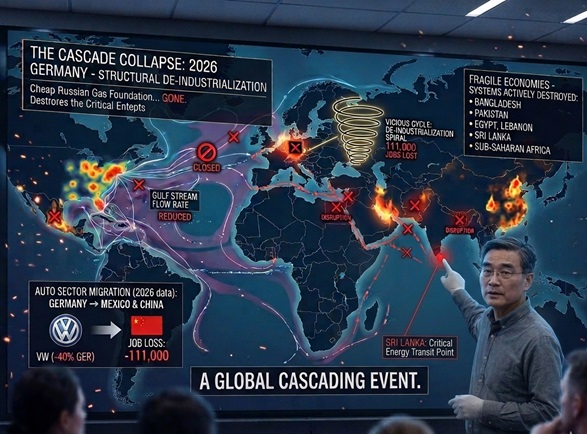
The global economy is entering a dangerous new phase. Cheap energy is disappearing, trade routes are breaking down, and a staggering $102 trillion in global debt is becoming increasingly difficult to sustain. These pressures are not hitting every country equally—some nations are far more exposed than others. This article is based on a detailed study of a YouTube discussion by Jiang Xueqin titled “The Nations That Will Collapse First: A Country-by-Country Economic Countdown.” Jiang, a Chinese educator and public intellectual known for his analysis of historical cycles and global power shifts, outlines how structural weaknesses are emerging across both developing and advanced economies. Building on his insights, this analysis takes a country-by-country look at the economies most at risk of severe disruption or collapse, including Sri Lanka, Bangladesh, Pakistan, Egypt, parts of Africa, and even major industrial economies like Germany, Japan, and South Korea. By examining the numbers and underlying vulnerabilities, we aim to understand who might fall first—and why. The world you grew up in is changing rapidly. What happens next will shape jobs, food security, and everyday life across the globe. This is not speculation—it’s a warning grounded in economic reality.
Forget wars and politicians. The most urgent question of the decade is one almost no one in mainstream media is asking: Which countries will break first?
For the past 40 to 50 years, the entire global economy has
rested on three fragile pillars: cheap energy, open trade routes, and
affordable debt. Every factory, every supply chain, every mortgage payment,
every pension fund—all of it was built on the assumption that energy would stay
cheap, goods would flow freely across borders, and governments could always
borrow more at low interest rates to paper over any problem.
Now, all three assumptions are breaking at once.
Energy prices are surging. Global trade is fragmenting under
tariffs, sanctions, and disruptions. And global public debt has reached a
record $102 trillion, with nearly half of OECD sovereign debt maturing between
2025 and 2027—at interest rates far higher than when that debt was issued.
This isn’t a crisis. It’s a structural reorientation. And
the nations most dependent on those three assumptions will collapse first.
Bangladesh: The 95% Problem
Let the number sink in: Bangladesh imports 95% of its oil.
Almost every drop of fuel powering its factories, transport, and agriculture
comes from somewhere else. Right now, petrol pumps in some districts have
already run dry. Fuel rationing is in place. Reserves are projected to last
only days.
Bangladesh built itself into one of the world’s
fastest-growing garment manufacturing economies on a simple formula: cheap
labor, cheap energy, cheap shipping. But what happens when energy is no longer
cheap? Factories slow. Exports stop. Foreign currency to pay for the next fuel
shipment doesn’t arrive. Less fuel means less production. Less production means
less export revenue. Less revenue means less fuel. That’s not theory. That’s a
death spiral—happening right now.
Pakistan: Living on the Edge
Pakistan imports roughly 80% of its energy from the Gulf.
And it was already under severe stress before the current war—unstable
currency, punishing inflation, repeated IMF bailouts.
Diesel is the backbone of Pakistan’s freight and
agriculture. As trucking costs climb, so does everything else: flour,
fertilizer, medicine, construction materials. For ordinary families, this isn’t
abstract economics. It’s whether you can afford to feed your children next
month.
Egypt: When the Lights Go Out
Egypt is one of the largest energy importers in the Middle
East and one of the most indebted economies in the region. The government has
already ordered malls, shops, and cafes to close early to conserve energy.
Public lighting has been cut. When a government starts turning off the lights,
it’s not managing a temporary disruption—it’s managing a structural shortage.
Egypt also imports a significant portion of its wheat. When
energy rises, fertilizer rises. When fertilizer rises, food rises. In a country
of over 100 million people where most already spend the majority of their
income on food, you don’t get an economic adjustment. You get social
instability. The Arab Spring wasn’t caused by social media. It was caused by
food prices. And those conditions are re-emerging—worse than before.
Africa: The Continent the World Is Ignoring
The International Rescue Committee has identified multiple
African nations facing catastrophic conditions heading into 2026:
South Sudan: 90% of government income comes from oil exports
disrupted by the war in neighboring Sudan.
Ethiopia: The U.S. slashed $387 million in funding, cutting
food distributions for millions and threatening malnutrition treatment for
650,000 women and children.
Burkina Faso: Armed groups have blockaded towns, cutting off
humanitarian aid for over a million people.
Across sub-Saharan Africa, more than half the population
lives in countries that spend more on debt interest payments than on health or
education. More to creditors than on keeping their own people alive and
educated. That’s not an economy. That’s a debt trap. And when energy spikes and
food follows, these nations have zero cushion. The bombs fall on Iran, but the
hunger arrives in Africa.
Germany: The Slow Collapse
Germany won’t run out of fuel overnight. But it’s
experiencing something arguably more dangerous: structural deindustrialization.
Germany built Europe’s most powerful manufacturing economy
on cheap Russian natural gas—powering chemical plants, steel mills, auto
factories, and the entire Mittelstand. That foundation is gone.
Since 2019, Germany has lost approximately 400,000
industrial jobs. In 2024 and 2025 alone, manufacturing shed another 248,000
positions across automotive, machinery, chemicals, and electronics. Car
production has fallen from 5.6 million vehicles in 2017 to a projected 3.4
million in 2026. BASF, Volkswagen, and Siemens are moving investment abroad.
The head of Siemens’ tax services said publicly that there is nothing speaking
in favor of investing in Germany anymore. GDP contracted in both 2023 and
2024—the first back-to-back annual decline in over two decades. Gas and electricity
prices rose 74% and 14% respectively between 2022 and 2025. And then the Iran
war spiked oil prices further.
Germany isn’t collapsing suddenly. It’s collapsing slowly.
And slow collapses are more dangerous—because by the time people notice, it’s
too late to reverse.
The $102 Trillion Trap
Global public debt reached $102 trillion in 2024. The IMF
projects it will exceed 100% of global GDP by the end of this decade.
Developing countries alone face $1.4 trillion in annual debt servicing costs.
Nearly half the world’s population—3.4 billion people—live in countries that
spend more on debt interest than on health or education.
When interest rates were near zero, governments borrowed
almost for free. They borrowed through the 2008 crisis, through COVID, for stimulus,
infrastructure, military spending. It worked—as long as rates stayed low. Now
rates have risen, and nearly 45% of OECD sovereign debt matures between 2025
and 2027. A wall of refinancing is hitting the global financial system at the
exact moment when energy is spiking, trade is fragmenting, and growth is
slowing.
For wealthy nations, this is painful but manageable. For
developing nations, it’s potentially catastrophic. They borrowed in dollars. As
geopolitical uncertainty drives investors into the dollar, the dollar
strengthens—and every dollar of debt becomes more expensive in local currency
terms. Your currency weakens. Your debt grows. You cut spending on health,
education, infrastructure. Your economy slows further. Your currency weakens more.
The spiral continues until something breaks.
The Pattern of History
We’ve seen this before. In the 1930s, the Great Depression
triggered a collapse in global trade. Export-dependent nations saw their
economies devastated. Import-dependent nations could no longer afford basic
goods. What followed was mercantilism, protectionism, every nation for
itself—and ultimately, war.
Economic interdependence works beautifully in good times.
But when the system breaks, the most dependent nations suffer first and worst.
And right now, the system is breaking.
Bangladesh, Pakistan, Egypt, Lebanon, Sri Lanka, the nations
of sub-Saharan Africa. These are not peripheral economies. These are home to
hundreds of millions of people whose daily lives depend on systems that are actively
being destroyed.
But here’s what you really need to understand: these are
simply the first to fall. If energy stays expensive, trade continues to
fragment, and debt keeps compounding, the crisis doesn’t stay in the developing
world. It moves up the chain—to Germany, to South Korea, to Japan, to nations
that look stable today but are built on the same fragile assumptions.
The world you grew up in—cheap energy, cheap food, cheap
everything delivered globally—that world is ending. Not overnight. But it is
ending. The nations that understand this transition now will be in a
fundamentally stronger position than those who wait for normal to come back.
Because normal is not coming back.
සම්බන්ධිත පුවත් | Related News



ප්රධාන පුවත්
ඥානසාර හිමියන්ගේ කටහඬ ගැන නොව, උන්වහන්සේ කියූ ජාතික කාරණා ගැන අවධානය යොමු කරන්න.. ඊළගට ජම්පරේ අන්දන්නේ මට ලු.. – මහාචාර්ය පූජ්ය ඉඳුරාගාරේ ධම්මරතන හිමි
එක් අයෙකු වෙනුවෙන් නීති නමන්න බෑ.. බන්ධනාගාර ආඥා පනතේ නීති රෙගුලාසි සමාලෝචනයට කමිටුවක් පත් කරනවා.. - ජනපති
රට වෙනුවෙන් කැපවූ භික්ෂූන් වහන්සේලා, රණවිරුවන් සහ ජාතික බලවේග මර්ධනය කිරීමට ආණ්ඩුවෙන් මෙහෙයුමක්.. - විමල්ගෙන් හෙළිදරව්වක්
ඇමරිකාව ප්රමුඛ කඳවුර අපේ රට තම ග්රහණයට නතු කරගෙන අවසන්.. - ජ්යෙෂ්ඨ මාධ්යවේදී මොහාන් සමරනායක
ඔය ගළවා දැම්මේ ඥානසාර හිමියන්ගේ සිවුර නොවේ.. මහා සංඟරත්නයේ බුද්ධ චීවරය.. පක්ෂ පාට වාද භේද නොසලකා එකාවන්ව නැගී සිටිය යුතුයි.. - විමල් වීරවංශ.
හෙළ ශාසනික ඉතිහාසයේ අඳුරුතම දිනය බවට 2026යේ ඔක්තෝබර් 6 වෙනිදා පත්වුණා.. සුදු අධිරාජ්යවාදීන් පවා කවදාවත් සිවුරට අත තිබ්බේ නෑ.. - උදය ගම්මන්පිල
ඥානසාර හිමියන්ට ගිහි වස්ත්ර ඇන්දවීම ගැන ත්රෛනිකායික මහානායක හිමිවරුන්ගෙන් දැඩි විරෝධය.. - බන්ධනාගාර කොමසාරිස්වරයාට විශේෂ ලිපියක්
ඤාණසාර හාමුදුරුවො වෙනුවෙන් රටපුරා මහා සංඝරත්නය කොළඹ මහාධිකරණයට..
යේමන ගැටුම කලාපීය යුද්ධයක් දක්වා උත්සන්න වෙයි
ඥානසාර හිමියන් ගේ සිවුර ගැලවීම වර්තමාන ආණ්ඩුවේ දැඩිි බෞද්ධ විරෝධී ප්රතිපත්තියේ දුෂ්ඨ පිළිබිඹුවක්.. - ජාතික සවිධානවලින චෝදනා..
සමාගම්වලට කැමති මිලකට ඉන්ධන විකුණන්න පුළුවන්- ඛනිජ තෙල් නීතිගත සංස්ථාවේ සභාපති ඩී.ජේ. රාජකරුණා
කච්චතිව් ගිවිසුම් යළි විවෘත කරන්න අදහසක් නැහැ.. - ඉන්දීය මධ්යම රජය එරට ශ්රේෂ්ඨාධිකරණයට දැනුම්දෙයි..
සුරේෂ් සලේ ගැන එක්සත් ජාතීන් ඇසූ ප්රශ්න හමුවේ ආණ්ඩුව මුනිවත රකියි..
ශ්රී ලංකාව NATO සංවිධානය සමඟ සබඳතා පැවැත්වීමෙන් වහල් රාජ්යයක් බවට පත්වීමේ අවදානමක්.. – ජ්යෙෂ්ඨ මාධ්යවේදී මොහාන් සමරනායකගෙන් අනාවරණයක්
උතුරු-නැගෙනහිර බෙදුම්වාදී ක්රියා වහා පාලනය කිරීමට මැදිහත්වන්න.. - ජාතික නිදහස් පෙරමුණෙන් ජනපති අනුරට ලිපියක්
වහබ්වාදී ආගමික අන්තවාදය ශ්රී ලංකා භූමියෙන් මුලිනුපුටා දැමීම සඳහා වූ ගෝඨාභය රාජපක්ෂ යෝජනාවලිය යනු කුමක් ද?